
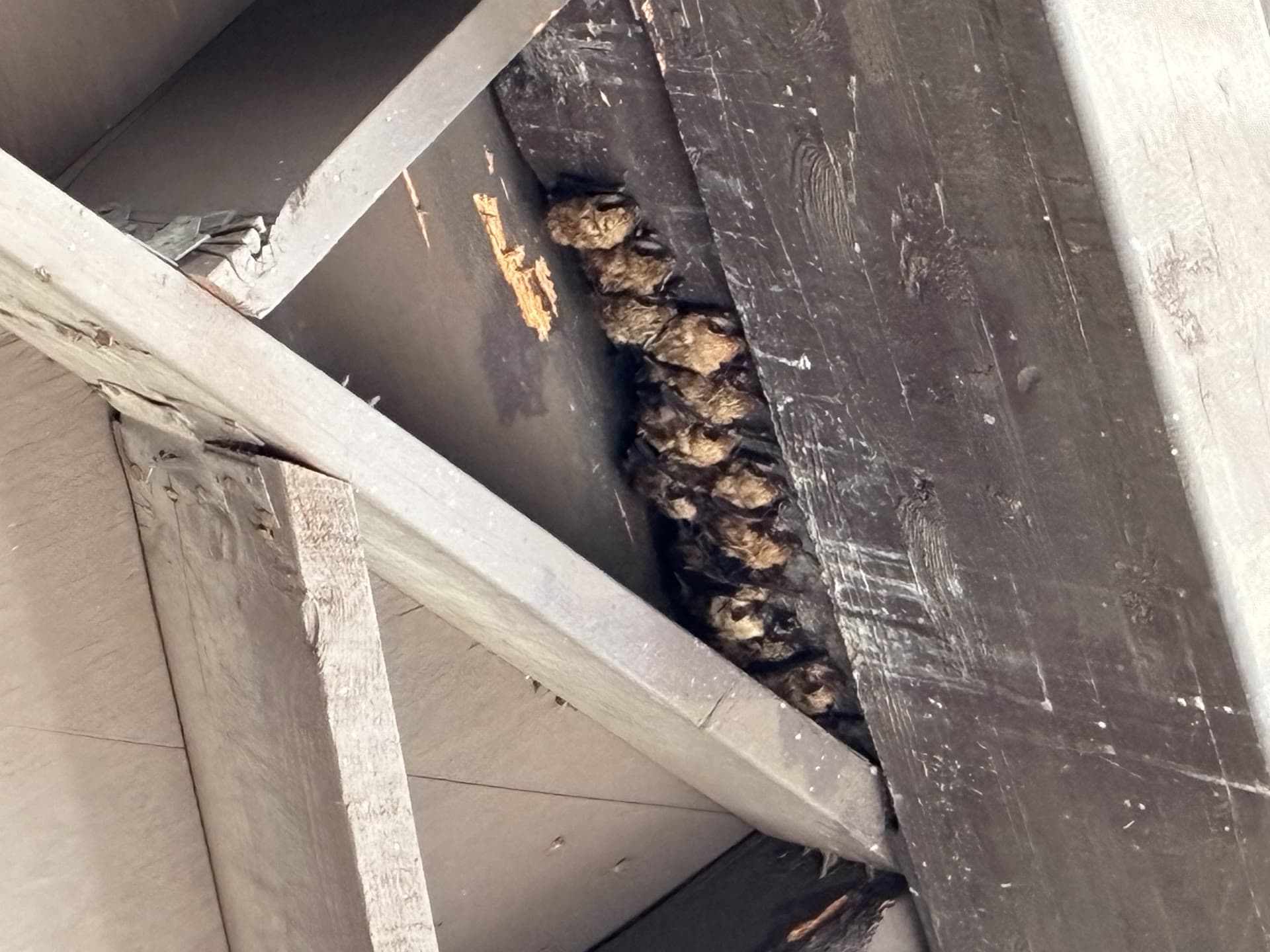
Why bats choose Nevada attics
Attics stay dark, warm, and quiet—ideal maternity and day roosts. Las Vegas Valley tile and stucco homes offer ridge and weep gaps; Reno craftsman and foothill builds offer fascia and chimney crowns. Mexican free-tailed bats, canyon bats, and big brown bats are frequent building users across the state.
Do not seal bats inside
Foam, screens, or caulk placed while bats are still roosting can trap animals in living space, create odor emergencies, and violate protected-wildlife expectations. One-way exclusion lets bats leave at dusk, then permanent sealing closes the envelope.
Inspection before exclusion
A proper attic job starts with interior and exterior mapping: primary exits with guano and rub marks, plus secondary gaps bats will shift to. Photos and a written scope come before devices go up.
Cleanup is a separate decision
Guano and insulation contamination can be remediated after (or carefully with) exclusion. You do not have to decide cleanup depth on the first phone call—inspection photos drive the right level.
Ready for help in Las Vegas, Reno, or elsewhere in Nevada? Start with bat removal or an attic inspection.